3. Handling & Storage Guidelines
-
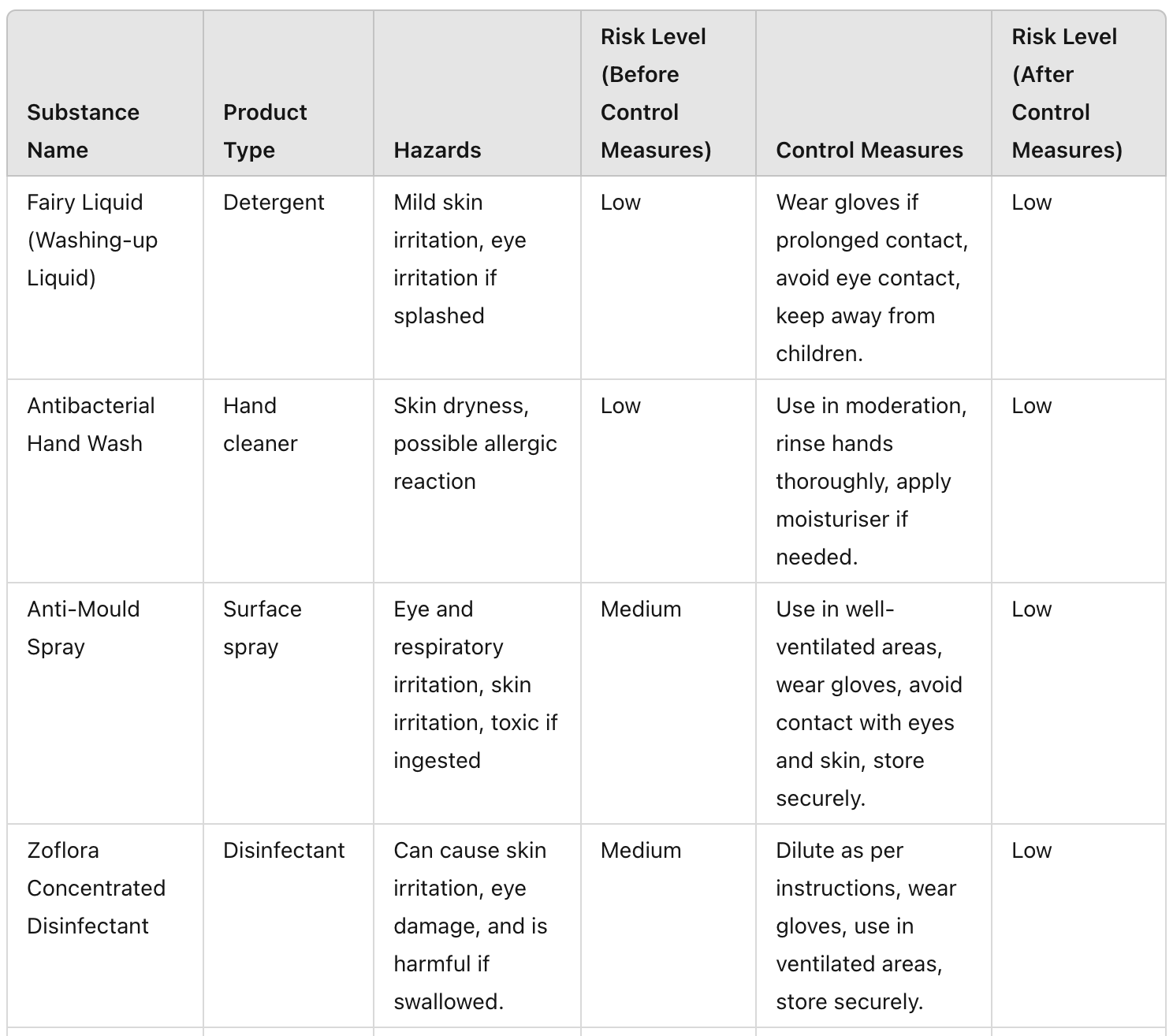
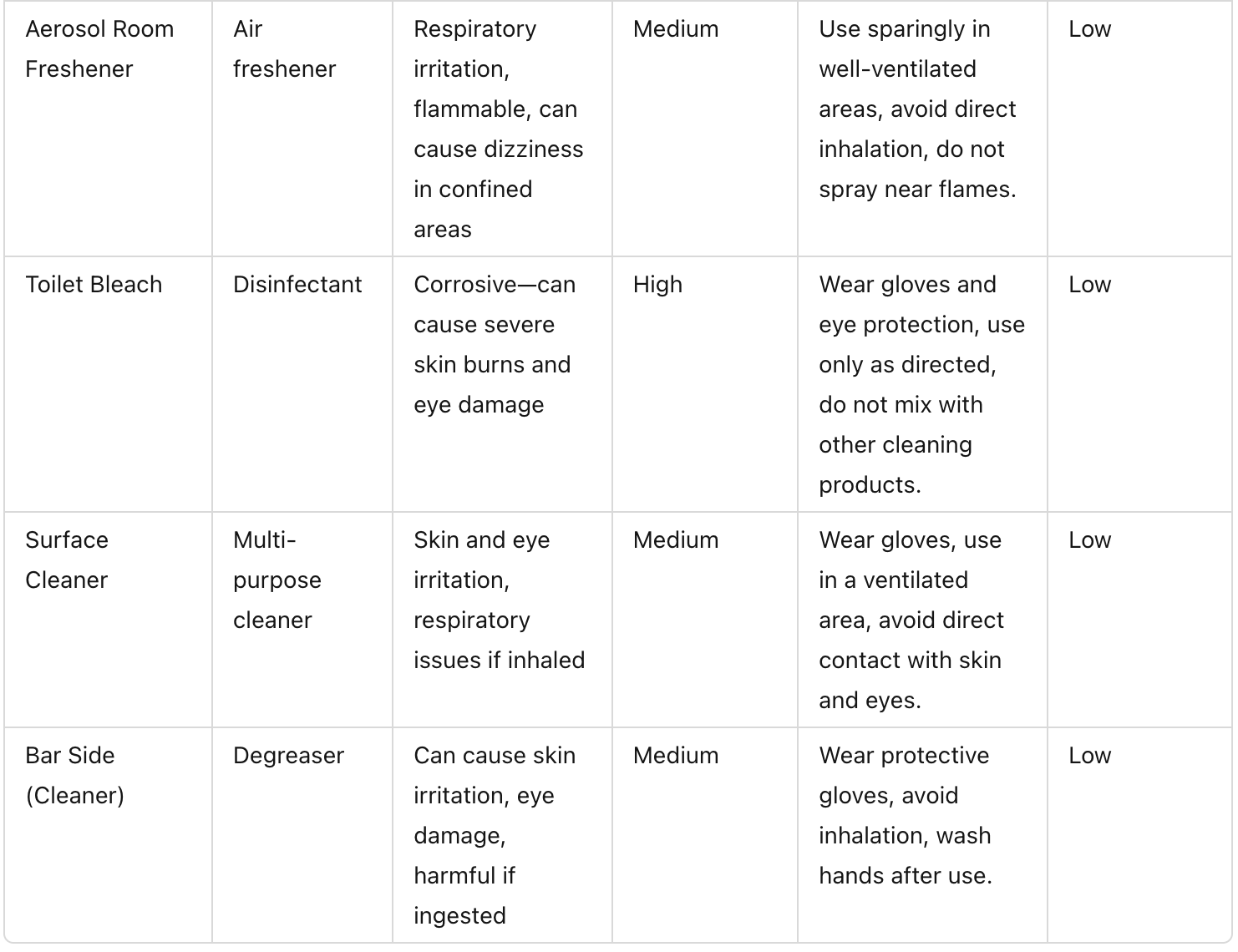
All cleaning products must be stored in a locked cupboard away from children.
-
Chemicals must be kept in their original, clearly labelled containers.
-
Avoid mixing cleaning products, particularly bleach and ammonia-based cleaners, to prevent toxic gas release.
-
Ensure good ventilation when using aerosol sprays and chemical cleaners.
-
Always follow the manufacturer’s instructions for dilution and use.
4. Personal Protective Equipment (PPE)
The following PPE should be worn as appropriate:
✔ Gloves – When handling bleach, anti-mould spray, and other irritant substances.
✔ Eye protection – When using anti-mould spray or concentrated disinfectants.
✔ Face mask – When using aerosol sprays in confined areas.
5. First Aid Measures
Skin Contact: Wash immediately with soap and water. Remove contaminated clothing if necessary.
Eye Contact: Rinse thoroughly with plenty of water for at least 15 minutes and seek medical attention if irritation persists.
Inhalation: Move to fresh air immediately. If breathing difficulties occur, seek medical attention.
Ingestion: Do not induce vomiting. Rinse mouth with water and seek medical advice.
6. Emergency Procedures
-
Spillage: Contain and clean up using appropriate PPE. Dispose of materials safely.
-
Fire Hazard: Avoid exposure to open flames, especially with aerosol products. Use a CO2 or foam fire extinguisher if needed.
-
Accidental Exposure: Ensure all staff are aware of emergency first aid measures and have access to a first aid kit.
7. Review & Monitoring
-
This COSHH assessment should be reviewed annually or whenever a new chemical is introduced.
-
Staff must be informed of and trained in COSHH regulations and safe chemical handling.
-
Records of any incidents related to hazardous substances must be documented and reported.
Approved by: Carmen Prince
Date: 26/03/25